
Commercial Auto Insurance in New Mexico: When Your Personal Auto Policy Isn't Enough
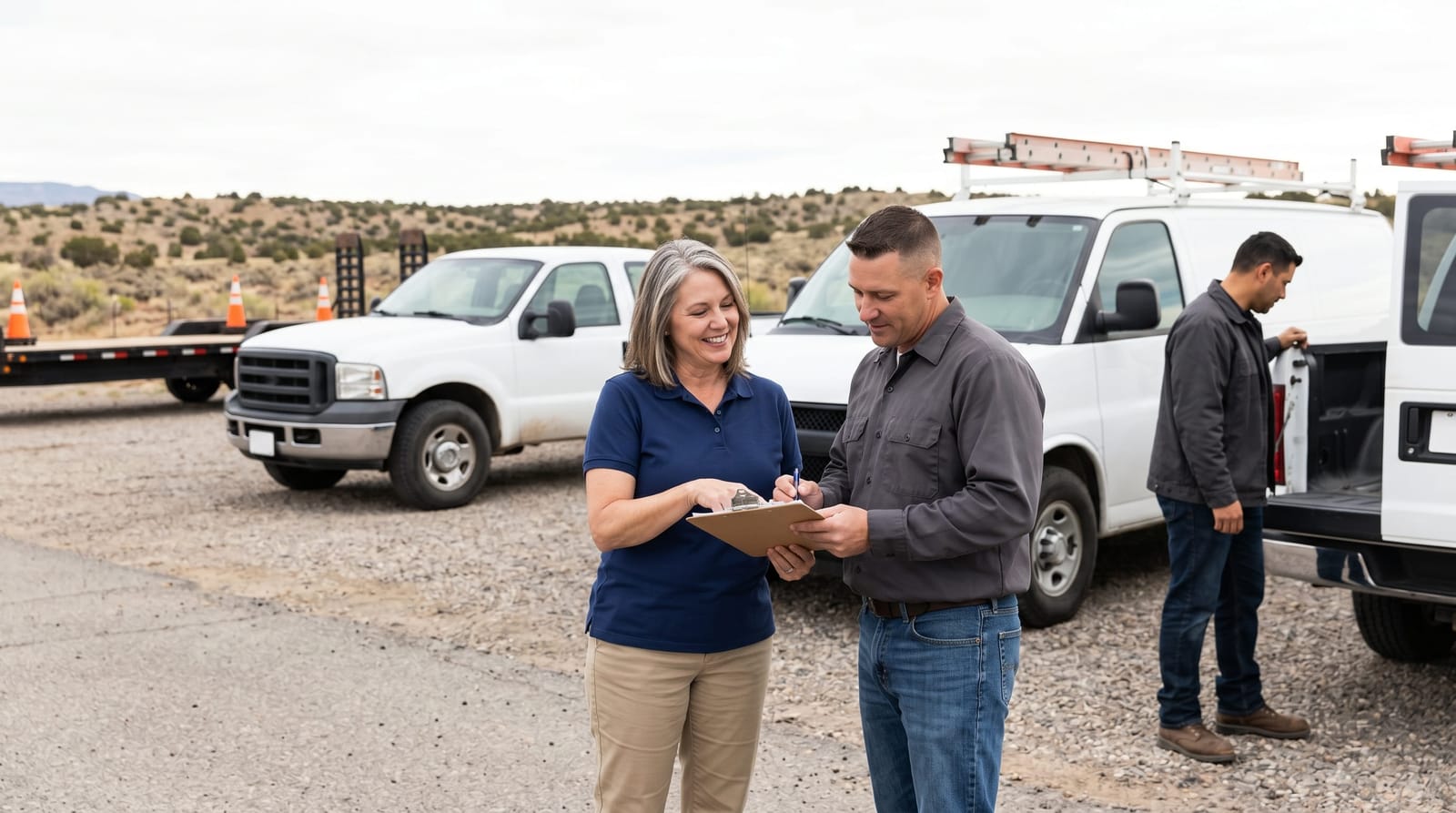
If you use a vehicle for your business — even occasionally — your personal auto insurance policy may leave you dangerously exposed. Many New Mexico business owners assume their existing coverage handles everything, only to discover after an accident that their insurer denied the claim because the vehicle was being used for commercial purposes. This post breaks down exactly when you need commercial auto insurance in New Mexico, what it covers, and why the gap between personal and commercial coverage can put your entire business at risk.
What Makes a Vehicle "Commercial" in New Mexico?
The line between personal and commercial vehicle use isn't always obvious, and that ambiguity is exactly where coverage gaps hide. In New Mexico, a vehicle is generally considered commercial when it's used primarily for business purposes — but "primarily" is a loose term that insurers interpret carefully when claims arise.
Here are common scenarios where personal auto insurance typically won't cover you:
- Making deliveries — Whether you're dropping off products, food, or documents, regular delivery use disqualifies most personal policies.
- Visiting clients or job sites — Contractors, consultants, and service providers who drive to customer locations regularly are often in commercial territory.
- Transporting tools, equipment, or inventory — Hauling business property in your truck or van crosses into commercial use, especially if the weight or nature of the cargo matters.
- Carrying passengers for compensation — Rideshare and taxi-adjacent services require separate commercial or TNC coverage.
- Employees driving on company business — If you have workers driving their own or your vehicles on your behalf, you need coverage beyond a personal policy.
The safest rule: if you're driving somewhere you wouldn't be going if you didn't have this business, that trip is probably commercial in nature.
New Mexico Commercial Auto Insurance Requirements
Under New Mexico's Mandatory Financial Responsibility Act (NMSA § 66-5-205), commercial auto insurance must meet these minimum liability limits:
- $25,000 per person for bodily injury
- $50,000 per accident for bodily injury when multiple people are injured
- $10,000 for property damage
These are the floor, not the ceiling. If your business involves heavier vehicles, frequent driving, or transporting high-value equipment or multiple passengers, these minimums may be woefully inadequate. A single serious accident with medical costs and vehicle damage can easily exceed $50,000 — and anything beyond your policy limit comes straight out of your business assets.
Certain vehicle types also carry additional requirements. Commercial trucks over a specific gross vehicle weight rating may need higher liability limits under federal or state regulations, particularly if they cross state lines. If your New Mexico business operates in the energy sector or involves hauling materials across the region, those rules become even more critical — something worth reviewing if you're looking at business insurance considerations for Farmington and Northwest New Mexico's energy sector, where fleet operations and heavy equipment transport are common.
The average cost for commercial auto insurance in New Mexico runs around $202 per month, though your actual premium depends on vehicle type, driver history, business use, and the coverage limits you select.
Fleet Coverage: Insuring Multiple Business Vehicles
If your business owns two or more vehicles, a fleet policy is almost always more efficient than insuring each vehicle separately. Fleet coverage consolidates your vehicles under a single policy with unified limits and a single renewal date, which simplifies management and often reduces your overall premium.
Fleet policies typically include:
- Liability coverage for bodily injury and property damage caused by your drivers
- Collision coverage for damage to your vehicles in an accident
- Comprehensive coverage for non-collision events like theft, vandalism, or weather damage
- Uninsured/underinsured motorist coverage — critical in New Mexico, where uninsured drivers remain a real concern
- Medical payments coverage for driver and passenger injuries regardless of fault
Fleet policies can cover a mix of vehicle types — vans, pickup trucks, sedans — under one umbrella. For growing businesses, this scalability is a major advantage. Adding a new vehicle to a fleet policy is typically straightforward, rather than starting a new standalone policy from scratch.
Hired and Non-Owned Auto Coverage: Protecting the Gaps
Even if your business doesn't own a single vehicle, you may still have significant auto liability exposure. This is where hired and non-owned auto (HNOA) coverage becomes essential.
Hired auto coverage applies when your business rents or leases vehicles for business use. If an employee rents a car for a business trip and gets into an accident, your business can be held liable — and the rental company's basic insurance rarely covers commercial use adequately.
Non-owned auto coverage applies when employees use their personal vehicles for business purposes. Say your office manager drives her personal car to pick up supplies, or a sales rep takes his personal truck to a client meeting. If either of them causes an accident during that errand, your business can face a lawsuit — and their personal auto policy will likely deny the business-related claim, leaving you exposed.
HNOA coverage is often available as an endorsement on a commercial general liability policy or as part of a Business Owner's Policy (BOP), making it a cost-effective way to close a gap that many small business owners don't even know exists.
The Real Risk of Using a Personal Vehicle for Business Without Proper Coverage
This is where the stakes become very clear. Using a personal vehicle for business without commercial coverage doesn't just mean your claim might be reduced — it means your insurer can deny the claim entirely. Personal auto policies typically contain language excluding coverage for vehicles used for "business purposes" or "commercial activities."
Here's what that looks like in practice: You're a contractor driving to a job site, loaded with tools. You rear-end another driver. The injured party sues. Your personal insurer investigates, determines you were on the way to a job, and denies coverage under the commercial exclusion. Now you're personally on the hook for medical bills, legal fees, and damages — and if those damages exceed your personal assets, your business assets are next.
The financial exposure isn't hypothetical. A moderate injury claim can easily run $75,000 to $150,000 or more. Without the right commercial auto policy, that number lands on you personally.
The solution is straightforward: get the right coverage before you need it. A commercial auto policy structured for your business use doesn't have to be expensive, especially when weighed against the cost of a single uncovered claim.
Frequently Asked Questions
Does my personal auto insurance cover me if I drive to meet clients?
Probably not — at least not reliably. Most personal auto policies exclude coverage when the vehicle is being used for commercial purposes. Driving to client meetings regularly qualifies as commercial use in most insurers' definitions. If you're making business-related trips with any frequency, you need either a commercial auto policy or a business-use endorsement added to your personal policy.
What if my employees drive their own cars for work?
Your business can still be held liable if an employee causes an accident while running a business errand in their personal vehicle. Non-owned auto coverage (often available as part of your commercial general liability or BOP policy) protects your business in exactly these situations. Their personal auto policy will likely deny the claim once they determine it was a business-related trip.
Is commercial auto insurance required if I only use my truck occasionally for deliveries?
Yes, if you're using it for any commercial purpose, you need proper commercial coverage. "Occasional" use doesn't create a safe zone — insurers look at what you were doing at the time of the loss, not how often you do it. One denied claim during an occasional delivery can be financially devastating.
How much does commercial auto insurance typically cost in New Mexico?
The average cost for commercial auto insurance in New Mexico is approximately $202 per month, but your actual premium varies based on the number of vehicles, vehicle types, driver records, business industry, and the coverage limits you choose. A small business with one vehicle and a clean driver history will pay significantly less than a company operating a multi-vehicle fleet.
Protecting Your Business on the Road
Commercial auto insurance in New Mexico is one of the most straightforward coverages to understand: if your vehicles are part of how you run your business, personal auto insurance won't protect you when it counts. Whether you're driving one truck to job sites or managing a fleet of vans making daily deliveries, the right commercial policy keeps your business — and your personal assets — protected. Talk to an independent agent who understands New Mexico's requirements and your specific business operations to build coverage that actually fits.