What Is Uninsured Motorist Coverage and Why New Mexico Drivers Need It?

If you've ever wondered whether you really need uninsured motorist coverage, the answer in New Mexico is an unambiguous yes. New Mexico consistently ranks among the worst states in the nation for uninsured drivers, meaning every time you pull onto a highway in Albuquerque, Las Cruces, or Santa Fe, there's a real chance someone nearby is driving without any insurance at all. This post breaks down exactly what uninsured and underinsured motorist coverage does, what happens after a crash with an uninsured driver, and why carrying only the state minimum leaves you dangerously exposed.
New Mexico's Uninsured Driver Problem Is Worse Than You Think
New Mexico is one of the top five states in the country for uninsured drivers. Estimates consistently place the share of uninsured motorists on New Mexico roads between 21% and 26% — meaning roughly one in four drivers you encounter may have no liability insurance whatsoever. For context, the national average hovers around 13%. That gap is enormous and translates directly into financial risk for every insured driver in the state.
Why is the rate so high? A combination of factors drives it: lower average household incomes in rural and urban communities alike, the relatively high cost of minimum coverage relative to wages in some regions, and historically inconsistent enforcement of insurance verification at traffic stops. Whatever the cause, the practical result is the same — New Mexico drivers face a statistically elevated risk of being hit by someone who cannot pay for the damage they cause.
This isn't a theoretical risk. Insurance claims professionals in New Mexico handle uninsured motorist claims routinely. If you commute daily in the Albuquerque metro or drive the stretch of I-25 between Santa Fe and Las Cruces, you are operating in one of the higher-risk insurance environments in the United States.
What Uninsured and Underinsured Motorist Coverage Actually Does
Uninsured motorist (UM) coverage steps in to pay for your injuries and, in some cases, your vehicle damage when the at-fault driver has no insurance. Underinsured motorist (UIM) coverage does the same when the at-fault driver has insurance, but their policy limits are too low to cover your full losses. In New Mexico, insurers are legally required to offer both coverages together with every liability policy they sell.
Bodily Injury vs. Property Damage UM Coverage
Uninsured motorist coverage comes in two distinct forms:
- Uninsured Motorist Bodily Injury (UMBI): Covers medical bills, lost wages, pain and suffering, and rehabilitation costs for you and your passengers when an uninsured driver causes the accident. New Mexico's minimum required UMBI limit mirrors the liability minimum: $25,000 per person and $50,000 per accident.
- Uninsured Motorist Property Damage (UMPD): Covers repairs to your vehicle when an uninsured driver damages it. This is particularly valuable if you do not carry collision coverage on an older vehicle but still want protection against another driver's negligence.
It's worth noting that UMBI is where the real financial protection lives. A serious injury — a broken spine, traumatic brain injury, or extended hospitalization — can generate medical bills and lost income that dwarf the cost of even a premium insurance policy. UMPD matters for your car; UMBI matters for your life.
What Happens After an Accident with an Uninsured Driver
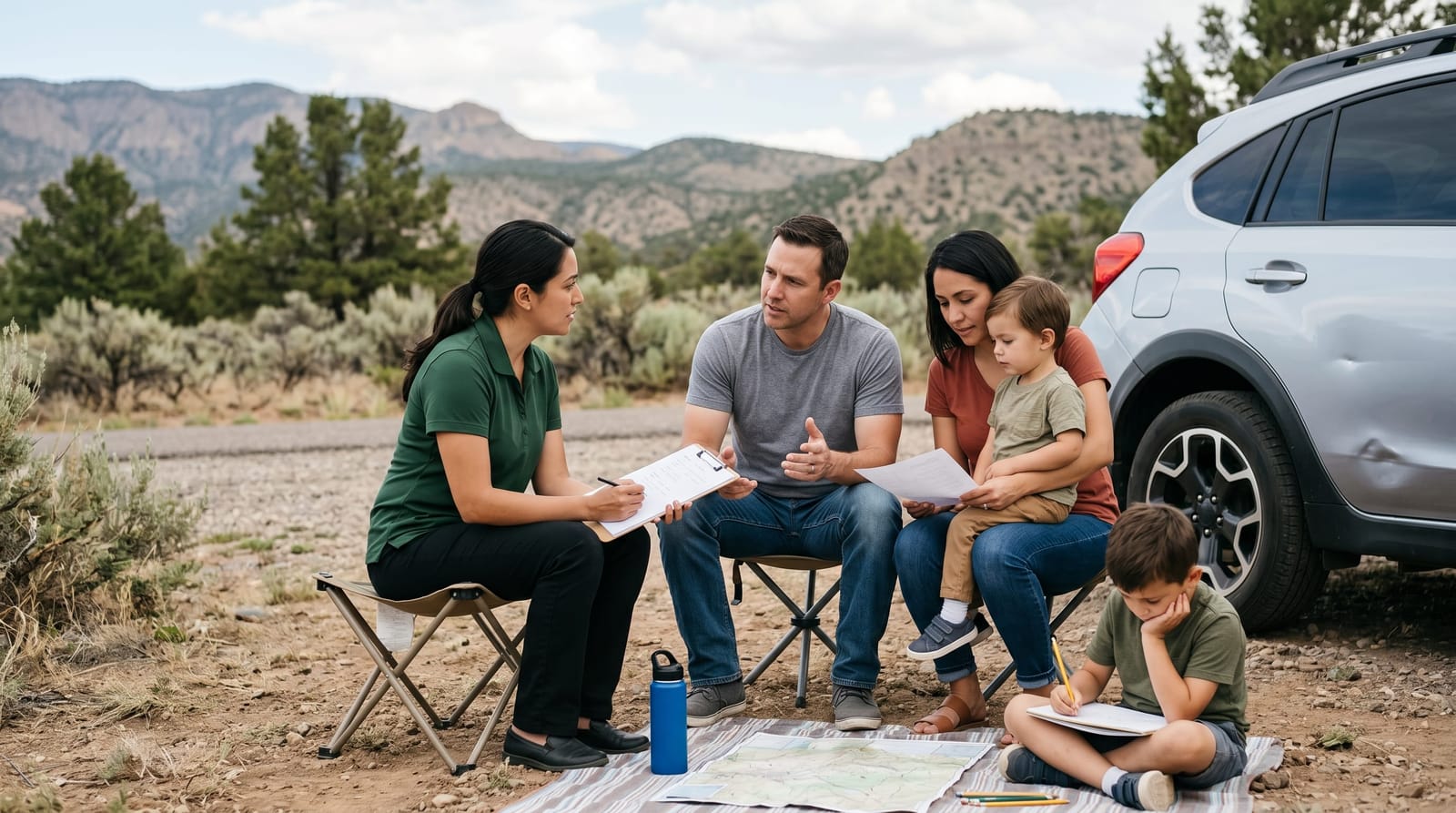
The scenario plays out faster and more stressfully than most people expect. You're rear-ended at a red light on Paseo del Norte. The other driver admits fault at the scene. You exchange information, call the police, and file a report. Then you discover: no insurance card, a lapsed policy, or a policy that was cancelled months ago.
Without UM coverage, your options are limited and mostly unpleasant:
- Sue the at-fault driver personally. You can pursue a civil judgment, but if the driver had no insurance, they likely have few attachable assets. Collecting on a judgment against an uninsured driver is notoriously difficult and slow.
- Use your own collision coverage for vehicle repairs, if you have it, and pay your deductible out of pocket — even though you did nothing wrong.
- Pay your medical bills out of pocket or exhaust your health insurance, potentially triggering deductibles and out-of-pocket maximums.
With UM coverage, the process is straightforward: you file a claim with your own insurance company. Your insurer treats it much like a standard claim, evaluates your injuries and damages, and pays up to your UM policy limits. You don't have to chase a broke driver through civil court for years.
Why State Minimum Limits Leave You Financially Exposed
New Mexico's required minimum UM coverage is $25,000 per person for bodily injury. That sounds substantial until you price out a real injury. A single emergency room visit for a moderate whiplash injury — imaging, treatment, and follow-up — can approach $10,000 to $15,000. A hospital stay following a serious collision can easily reach $100,000 or more before rehabilitation, physical therapy, or specialist care is factored in. Lost wages for a skilled worker sidelined for months can add tens of thousands more.
At the $25,000 minimum, a genuinely serious accident leaves you personally responsible for everything above that limit. Given the frequency of uninsured drivers on New Mexico roads, carrying minimum UM limits is essentially accepting that your protection is cosmetic rather than substantive.
Insurance professionals generally recommend carrying UM/UIM limits that match your liability limits. If you carry $100,000/$300,000 in liability coverage, your UM should mirror that. The cost difference between minimum and higher UM limits is typically modest — often $10 to $30 per month — making it one of the best-value upgrades available on any New Mexico auto policy.
It's also worth understanding how this fits into the broader picture of your auto insurance policy. New Mexico drivers who are navigating coverage after a serious accident involving an uninsured driver may also encounter the SR-22 filing requirement if their own record is involved — a topic covered in detail in our guide to SR-22 insurance in New Mexico, which explains what that filing means and how it affects your coverage going forward.
How to Choose the Right UM/UIM Limits for Your Situation
Selecting UM/UIM limits isn't one-size-fits-all. A few factors should guide your decision:
- Your health insurance situation: If you have comprehensive health coverage with low out-of-pocket maximums, your exposure from medical bills is partially buffered. If you have high deductibles or limited health coverage, robust UMBI limits matter even more.
- Your income and earning potential: Higher earners have more to lose from lost wages following an injury. UM coverage that replaces income while you recover is proportionally more valuable.
- Your daily driving environment: Drivers who commute on Albuquerque's interstates or travel frequently on rural two-lane highways face statistically different risk profiles than someone who drives locally at low speeds.
- Your passengers: UM per-accident limits apply across all injured occupants. If you regularly drive with family members — particularly children — higher per-accident limits provide substantially better protection.
A licensed independent agent who understands New Mexico's market can help you model specific coverage scenarios and find the right balance between protection and premium cost.
Frequently Asked Questions
Is uninsured motorist coverage required in New Mexico?
Yes. New Mexico law requires insurance companies to offer uninsured motorist coverage to every policyholder purchasing liability insurance. The minimum required limit is $25,000 per person and $50,000 per accident for bodily injury. While drivers can technically waive this coverage in writing, doing so in a state with one of the nation's highest uninsured driver rates is a significant financial risk.
What's the difference between uninsured and underinsured motorist coverage?
Uninsured motorist (UM) coverage applies when the at-fault driver has no insurance at all. Underinsured motorist (UIM) coverage applies when the at-fault driver has insurance, but their limits are too low to fully compensate you for your injuries or losses. In New Mexico, both coverages are typically sold together and are equally important given the prevalence of drivers carrying only minimum liability limits.
Will filing a UM claim raise my insurance rates in New Mexico?
In most cases, filing an uninsured motorist claim should not cause a premium increase because you were not at fault. However, policies vary by insurer, and it's worth asking your agent directly before filing. New Mexico's regulations generally protect policyholders from surcharges on not-at-fault claims, but reviewing your specific policy terms is always advisable.
Does UM coverage apply if I'm hit as a pedestrian or cyclist?
Yes. In New Mexico, your uninsured motorist bodily injury coverage typically extends to injuries you sustain as a pedestrian or cyclist when an uninsured driver is at fault. This makes UM coverage relevant even when you're not in your vehicle — an important consideration for urban residents in Albuquerque or Santa Fe who walk or bike regularly.
The Bottom Line on Uninsured Motorist Coverage in New Mexico
New Mexico's uninsured driver rate isn't a statistical abstraction — it's a daily reality on roads from Farmington to Roswell. Uninsured and underinsured motorist coverage is the one policy component that protects you specifically from the negligence of drivers who disregard the law. Carrying minimum limits provides a legal floor, not genuine protection. For most New Mexico drivers, increasing UM/UIM limits to match their liability coverage is one of the smartest, most cost-effective decisions they can make. Talk to an independent agent about your current coverage and whether your limits truly reflect the risk you face every time you drive.