
High-Value Home Insurance in New Mexico: The Complete Guide for Affluent Homeowners
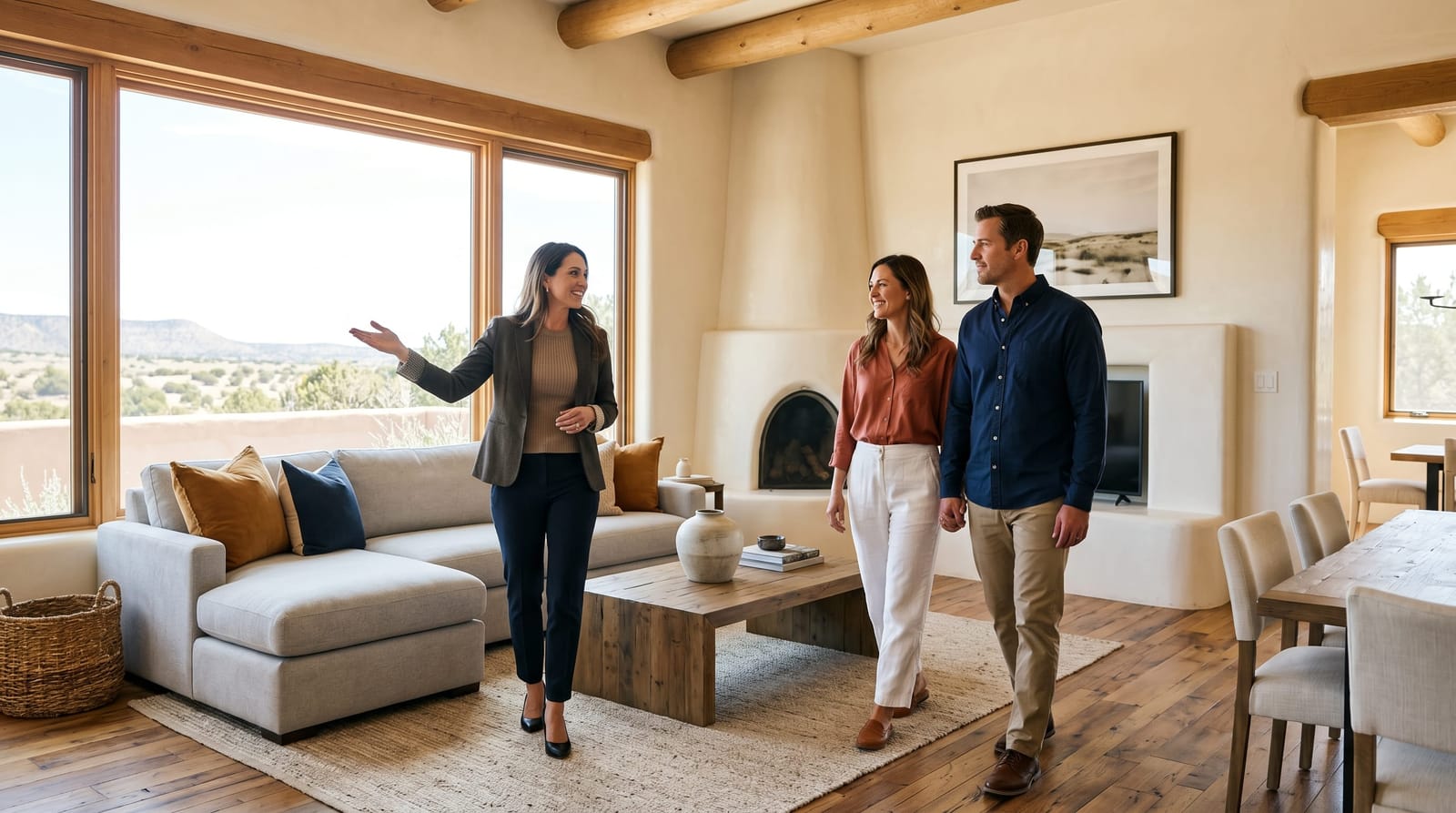
You've worked hard to build something exceptional. Whether it's a custom adobe estate nestled in the foothills above Albuquerque, a historic hacienda in the heart of Santa Fe, or a sprawling ranch property on the high desert plains near Taos — your home is more than a financial asset. It's the centerpiece of your life, your legacy, and your family's security.
So when you start shopping for home insurance, it can be surprisingly frustrating to discover that standard policies weren't built with your property in mind. The coverage limits are too low. The replacement cost estimates don't account for custom finishes, imported materials, or the craftsmanship that makes your home unique. And if your property sits in a brush-heavy canyon, on a hillside, or in a remote area with limited fire department access, many standard insurers simply won't write a policy at all.
This guide was written specifically for New Mexico homeowners who own high-value, luxury, or hard-to-insure properties. Inside, you'll learn how high-value home insurance works, what sets it apart from standard coverage, how New Mexico's unique landscape and risks factor into your policy options, what you should expect to pay, and how a local specialist can help you find the right protection for everything you've built. Let's start from the beginning.
What Makes a Home "High-Value" — and Why It Changes Everything About Your Insurance
The insurance industry generally considers a home "high-value" when its rebuild or replacement cost exceeds $750,000, though many specialty carriers set that threshold at $1 million or higher. However, the dollar figure alone doesn't tell the full story.
A high-value home isn't just expensive — it's often complex. Think about what goes into a custom-built New Mexico property: hand-carved vigas and latillas, imported Talavera tile, custom plaster walls, radiant heated floors, professional-grade kitchens, smart home systems, wine cellars, guesthouses, casitas, or expansive outbuildings. These elements are expensive to build and even more expensive to replicate after a loss.
Standard homeowners insurance policies, even good ones, are designed around average homes. They use generic cost-per-square-foot formulas that can dramatically underestimate what it actually costs to rebuild a luxury property with premium materials and skilled craftsmen. If your home is insured for $400,000 but would cost $1.2 million to rebuild to its original standard, you're significantly underinsured — and that gap becomes painfully clear only when you need to file a claim.
Signs Your Home May Need a High-Value Policy
- Your home's rebuild cost exceeds $750,000
- Your property features custom construction, imported materials, or artisan craftsmanship
- You own high-value personal property such as fine art, jewelry, antiques, or wine collections
- Your home sits on acreage, in a rural location, or in a high-risk terrain zone
- You've had difficulty finding coverage through standard carriers
- Your lender requires a specific level of coverage your current policy doesn't meet
- You own additional structures on the property, such as guesthouses, casitas, or stables
If several of these apply to you, a standard policy likely isn't giving you the protection you actually need. High-value home insurance is specifically designed to close that gap.
How High-Value Home Insurance Differs from Standard Policies
At first glance, high-value home insurance looks similar to a standard homeowners policy — you're still covering the structure, your belongings, liability, and additional living expenses. But the differences in how those coverages are structured can be dramatic.
Guaranteed or Extended Replacement Cost
One of the most important features of a high-value policy is guaranteed replacement cost coverage. Instead of capping your payout at a predetermined dollar amount, this coverage commits to rebuilding your home to its original standard — even if construction costs have increased since your policy was written. In New Mexico, where labor costs and material prices have risen sharply in recent years, this kind of protection matters enormously.
Agreed Value Coverage
Premium carriers like Chubb offer agreed value policies, where you and the insurer agree upfront on what your home is worth. If a total loss occurs, there's no depreciation applied and no argument about replacement costs. You receive exactly what was agreed upon — no negotiation required at the worst possible moment.
Broader Personal Property Coverage
High-value policies treat your belongings differently, too. While a standard policy might cap jewelry coverage at $1,500 or fine art at $2,500, luxury policies can cover collections of art, jewelry, wine, antiques, and rare items at their full appraised value. Many carriers that specialize in this space offer blanket coverage for personal property with fewer exclusions and a more straightforward claims process.
Enhanced Liability Protection
Affluent homeowners often face greater liability exposure — whether from domestic staff, frequent guests, recreational amenities like pools or equestrian facilities, or simply the higher likelihood of significant claims. High-value policies typically offer much higher liability limits, and many pair seamlessly with personal umbrella policies to extend that protection further.
Specialized Loss Settlement
Premium insurers often assign dedicated claims specialists and local contractors with experience in high-end construction. Rather than sending a general adjuster with limited knowledge of custom homes, these carriers ensure your claim is handled by someone who understands the difference between standard drywall and hand-troweled plaster — and prices the repair accordingly.
New Mexico's Unique Risks for High-Value Homeowners
New Mexico is one of the most beautiful and geographically diverse states in the country — and that landscape comes with real risks that every homeowner should understand, especially those with properties in elevated, forested, or remote areas.
Wildfire Risk
Wildfire is the most pressing concern for many New Mexico homeowners, and rightly so. The state has seen some of the most destructive fires in its history in recent years. The 2022 Hermits Peak/Calf Canyon Fire — the largest in New Mexico history — burned more than 340,000 acres and destroyed hundreds of homes. Properties in the Jemez Mountains, Sangre de Cristo range, East Mountains outside Albuquerque, and the hillside communities above Santa Fe all face meaningful wildfire exposure.
For homeowners in these areas, wildfire insurance isn't just a preference — it's a necessity. And it's also one of the primary reasons standard carriers decline to write policies in these locations.
Terrain and Accessibility
Many of New Mexico's most desirable luxury properties are also its most remote. Hillside homes, canyon properties, and rural estates often have limited road access and may be outside the five-mile response radius that many insurers use to evaluate fire protection. When a fire department can't reach your property quickly, your risk profile changes significantly in the eyes of an underwriter.
Severe Weather and Monsoon Season
New Mexico's summer monsoon season brings intense thunderstorms, flash flooding, and lightning strikes — particularly in areas along the Rio Grande corridor and at higher elevations. Flash flooding can be especially damaging for properties along arroyos or in canyon communities. Hail is also a significant threat, with some areas experiencing damaging hail multiple times per year.
Soil and Foundation Issues
Expansive soils — those that swell when wet and shrink when dry — are common across much of New Mexico. These soil conditions can cause foundation movement and structural damage that some standard policies exclude entirely. Luxury homeowners with large, custom-built homes need to understand what their policy does and doesn't cover when it comes to earth movement and soil-related damage.
Understanding these risks isn't about creating alarm — it's about making sure your coverage is built around the actual environment your home sits in. A local insurance specialist with experience in New Mexico properties can help you navigate these nuances in a way that a national call center simply cannot.
Why Standard Insurers Decline High-Value and High-Risk New Mexico Properties
If you've tried to insure a high-value property in a brush area, on a hillside, or in a remote part of New Mexico, you may have already encountered this frustration: standard insurance companies simply won't write the policy. Understanding why can help you find the right solution.
Standard carriers use automated underwriting systems with strict criteria. These systems evaluate properties quickly and flag any combination of factors that increases risk beyond their comfort zone. Common reasons a high-value New Mexico property might be declined include:
- Proximity to wildland areas: Homes within a certain distance of brush, chaparral, or forested land are flagged as high wildfire risk
- Fire protection class: Properties in rural areas with limited fire department coverage receive higher protection class ratings, which some carriers won't insure
- Rebuild cost exceeds carrier limits: Many standard carriers cap their maximum coverage amounts well below what a luxury home would cost to rebuild
- Unique construction: Adobe, rammed earth, and other traditional New Mexico building methods don't fit neatly into standard underwriting models
- Remote location: Long distances from emergency services or difficult terrain access make standard carriers uncomfortable
- Prior losses or claims history: A property with past claims related to fire or weather events may be ineligible for standard coverage
Being declined by a standard carrier doesn't mean your home is uninsurable. It means you need an insurance partner who works with specialty and surplus lines markets that are specifically built to cover complex, high-value, and high-risk properties. This is exactly where working with a knowledgeable local agency makes all the difference.
What to Expect When It Comes to Cost
Home insurance costs in New Mexico vary widely depending on location, property value, construction type, and coverage levels. According to current industry data, the average annual cost of homeowners insurance in New Mexico is approximately $2,736 for a home with $300,000 in dwelling coverage. For high-value properties, that number increases substantially — and appropriately so.
A home with a rebuild cost of $1 million or more, located in a high-risk wildfire zone, with premium finishes and a private art or jewelry collection, will carry a meaningfully higher premium than an average home. Depending on the property, high-value homeowners in New Mexico might reasonably expect to pay anywhere from $5,000 to $15,000 or more annually — sometimes higher for properties in the most challenging locations.
Factors That Influence Your Premium
- Rebuild cost: The higher your home's true replacement value, the more coverage you need and the higher your base premium
- Location and risk zone: Wildfire-prone areas, remote locations, and high terrain carry higher rates
- Construction quality and materials: Custom materials cost more to replace and are factored into pricing
- Deductible selection: Higher deductibles reduce your premium; lower deductibles increase it
- Claims history: Prior claims on a property affect future premiums
- Security and mitigation features: Central alarm systems, fire suppression systems, defensible space, and gated access can all help reduce your rate
- Personal property values: Adding scheduled coverage for art, jewelry, or wine collections adds to your premium
It's also worth noting that the cheapest policy is rarely the right policy for a high-value home. Underinsuring to save on premium is a risk that can leave you financially exposed after a serious loss. The goal is finding comprehensive, accurate coverage at a competitive price — and that's a conversation best had with a specialist who understands both your property and the New Mexico market.
Key Coverage Areas Every High-Value Homeowner Should Understand
When reviewing a high-value home insurance policy, there are several specific coverage areas worth evaluating carefully. Here's what to look for and what questions to ask.
Dwelling Coverage
This covers the main structure of your home. For high-value properties, make sure your dwelling limit reflects the true cost to rebuild — not the market value or purchase price. These figures can be very different. An accurate replacement cost appraisal is an important starting point.
Other Structures
Guesthouses, casitas, workshops, barns, stables, fencing, and detached garages are typically covered under a separate "other structures" limit. Standard policies set this at 10% of your dwelling coverage, which can be grossly insufficient for a property with multiple significant outbuildings. High-value policies often allow you to increase this limit substantially.
Personal Property
A standard policy's personal property limits and sub-limits for valuables like jewelry, art, and collectibles are rarely adequate for affluent homeowners. Consider whether you need scheduled personal property coverage — essentially a separate endorsement or mini-policy for specific high-value items at their appraised value.
Loss of Use / Additional Living Expenses
If your home is uninhabitable after a covered loss, this coverage pays for your temporary living costs. For high-value homeowners accustomed to a certain standard of living, standard loss of use limits can fall short. Look for policies that cover comparable accommodations without strict dollar or time caps.
Liability Coverage
Personal liability protects you if someone is injured on your property or if you're found legally responsible for damage to someone else's property. Higher-value estates, properties with pools, equestrian facilities, or staff should carry at minimum $500,000 in liability — and a personal umbrella policy can extend that to $1 million, $5 million, or more.
Wildfire and Brush Coverage
This deserves its own conversation for New Mexico homeowners. Not all policies cover wildfire the same way, and in high-risk zones, you need to read the fine print carefully — or work with someone who will read it for you. Coverage for fire suppression costs, debris removal, and landscaping restoration after a wildfire event can vary significantly by carrier.
How to Find the Right High-Value Home Insurance in New Mexico
Finding the right coverage for a luxury or hard-to-insure New Mexico property isn't as simple as requesting an online quote. It requires working with someone who has relationships with specialty carriers, understands the state's unique risk environment, and takes the time to evaluate your specific property and coverage needs.
Work with a Local Independent Agency
An independent insurance agency isn't tied to a single carrier. That means they can shop multiple markets — including specialty and surplus lines carriers that standard agents don't have access to — to find the best combination of coverage and price for your property. For high-value homes in New Mexico, this flexibility is invaluable.
Get an Accurate Replacement Cost Estimate
Before you can properly insure your home, you need to know what it would actually cost to rebuild it. A professional replacement cost appraisal accounts for square footage, construction quality, finishes, custom features, and current labor and material costs in your area. Many premium carriers will arrange or assist with this as part of the underwriting process.
Take an Inventory of Your Personal Property
Document your belongings — especially high-value items like art, jewelry, collectibles, wine, and electronics. Photographs, receipts, and appraisals create a clear record that makes the claims process much smoother if you ever need it.
Ask About Wildfire Mitigation Credits
If your property is in or near wildfire-prone terrain, ask your agent whether you qualify for rate credits based on mitigation efforts. Defensible space clearance, fire-resistant roofing, ember-resistant venting, and exterior sprinkler systems can all improve your insurability and sometimes your premium.
Review Your Policy Annually
Your coverage needs to grow with your property. Renovations, additions, new valuables, or changes in your local risk environment should all prompt a policy review. An annual check-in with your agent helps ensure your coverage never lags behind your actual exposure.
Deep Dive Topics: Explore the Full Picture
High-value home insurance in New Mexico is a broad topic, and the details matter. The following guides take a closer look at specific aspects of insuring luxury and hard-to-insure properties across the state. Whether you're curious about wildfire coverage, pricing for a $500K+ home, or what your lender requires, these resources are here to help.
- Why Standard Policies Fall Short: Many luxury homeowners are surprised to discover their current policy won't cover what they assume it will. Learn more about home insurance denied high value property New Mexico — including why standard carriers decline these properties and what alternatives exist.
- Coverage for Brush and High-Risk Areas: If your property backs up to open land, sits in a canyon, or is surrounded by vegetation, your insurance options look different from a standard suburban home. Get the full story on home insurance brush area New Mexico and what homeowners in these zones need to know.
- Luxury Home Insurance in Albuquerque and Santa Fe: These two cities are home to some of New Mexico's most architecturally significant and expensive properties. Explore your options for luxury home insurance Albuquerque Santa Fe, including coverage considerations unique to each market.
- Cost of Coverage for $500K+ Homes: Understanding what you'll pay — and why — is an important part of making smart coverage decisions. Our guide to home insurance cost expensive home New Mexico breaks down the factors that drive premiums for high-value properties and what you can do to manage costs.
- Insurance Requirements for High-End Mortgages: If you have a jumbo loan or high-value mortgage, your lender likely has specific insurance requirements that go beyond what standard policies provide. Learn what lenders expect when it comes to homeowners insurance high value mortgage New Mexico.
- Wildfire Insurance for New Mexico Homeowners: With wildfire risk increasing across the state, understanding how your policy responds to fire events is essential. Our dedicated resource on wildfire insurance New Mexico homeowners covers everything from coverage basics to mitigation strategies and high-risk zone options.
Conclusion: Protecting What You've Built with the Right Partner
Owning a high-value home in New Mexico is a privilege — and protecting it requires an approach that's just as thoughtful and intentional as the home itself. Standard insurance policies weren't designed for custom estates, hillside properties, brush-adjacent land, or the unique construction traditions that make so many New Mexico homes exceptional. They weren't built to handle the state's wildfire realities, its remote landscapes, or the complexity of insuring a property worth well over $1 million.
The good news is that the right coverage does exist. Specialty carriers with deep experience in high-value homes, a local agent who understands the New Mexico market, and a coverage strategy tailored to your specific property can give you the kind of protection that lets you enjoy your home with genuine peace of mind — not just a stack of paperwork you hope you never need to use.
At Quezada Jacobs, we work with New Mexico homeowners who own exceptional properties and need an insurance partner who takes that seriously. We're not a national call center. We're a local agency that builds real relationships, takes time to understand your property and your priorities, and works hard to find coverage solutions that actually fit. Whether you're starting fresh, re-evaluating your current coverage, or trying to find a policy after a standard carrier declined your home, we're here to help.
Ready to talk about your property? Contact Quezada Jacobs today for a personalized consultation and let's make sure your home is protected the way it deserves to be.