
Can I Get Home Insurance in the Taos Mountains? Covering High-Altitude and Remote Properties
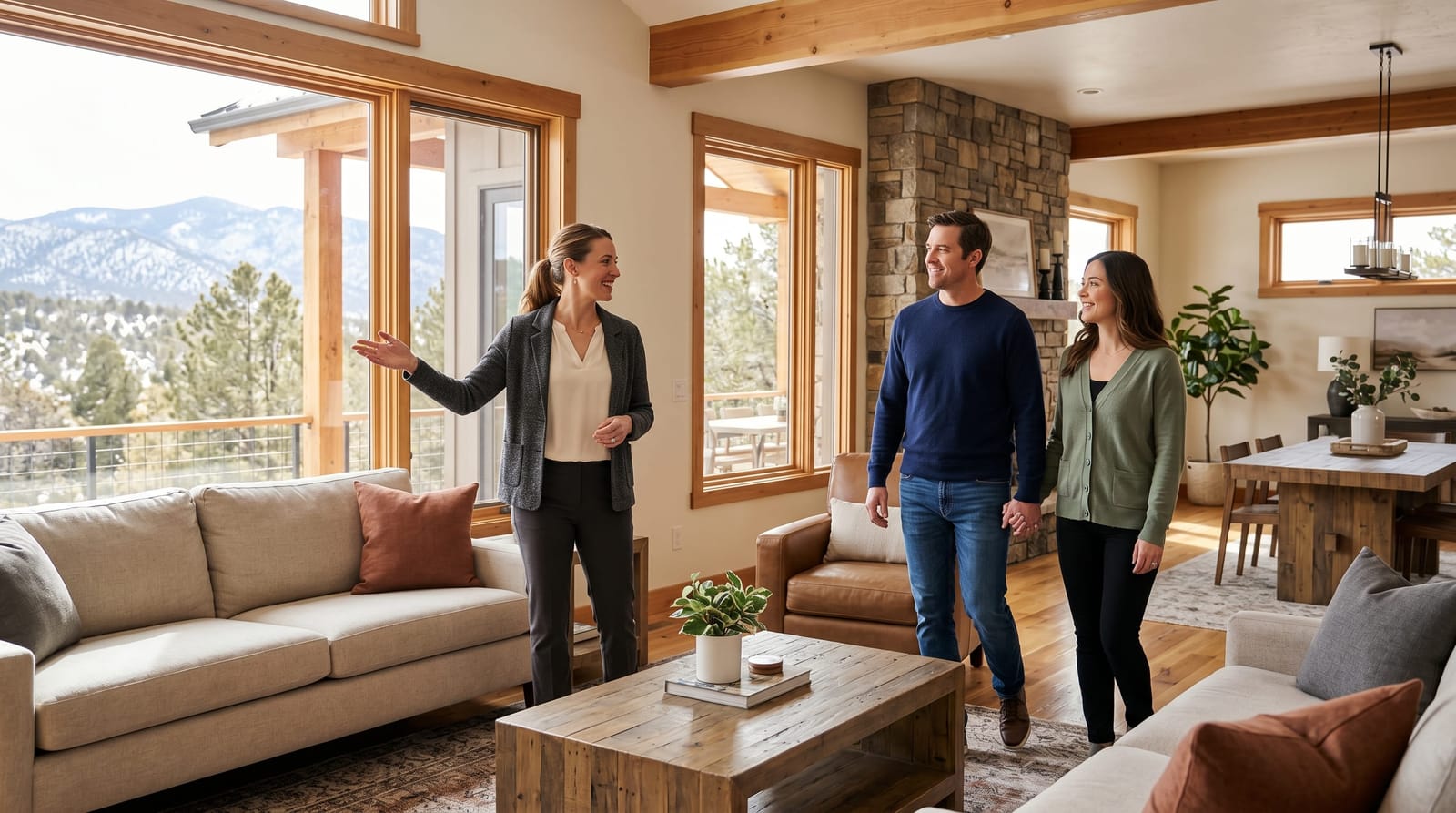
If you own a home tucked into the Taos Mountains — whether it's a year-round retreat near Taos Ski Valley, a seasonal cabin above Arroyo Seco, or a sprawling property along the upper Rio Hondo canyon — you've probably already discovered that standard home insurance is hard to come by. You're not imagining it. Insuring high-altitude, remote properties in northern New Mexico comes with a genuinely different set of challenges than insuring a home in Albuquerque's East Side. This guide explains exactly why those challenges exist, how specialty insurers evaluate your property, and what you can do to maximize your chances of securing meaningful coverage.
Why Standard Insurers Struggle with Taos Mountain Properties
Most home insurance is priced and underwritten around a set of assumptions: the home is near a staffed fire department, paved roads provide year-round access, emergency services can respond within minutes, and the property isn't surrounded by thousands of acres of dry mixed-conifer forest. Taos Mountain properties routinely violate all of these assumptions at once.
Altitude alone isn't the primary concern — it's everything that comes with altitude in this region. Properties at 8,000 feet or above near the Sangre de Cristo range face:
- Extended fire response times: Many mountain properties sit 20 to 40 minutes or more from the nearest staffed fire station. Insurers use ISO (Insurance Services Office) Public Protection Classifications to rate fire risk based on proximity to fire departments, water supply access, and local department resources. Rural mountain properties in Taos County often fall into Class 8, 9, or 10 — the highest-risk tiers — which either triggers premium surcharges or flat-out declinations from standard carriers.
- Brush and timber fire exposure: The forests surrounding Taos are beautiful, but they're also under constant drought stress. The Hermits Peak/Calf Canyon Fire of 2022 — the largest in New Mexico history — burned more than 341,000 acres just east of the Taos area. Insurers are acutely aware of this history and model future exposure accordingly.
- Seasonal access and vacancy concerns: Homes that are unoccupied for extended winter or summer periods present elevated risk for undetected water leaks, freeze damage, and liability events. Carriers often restrict or exclude coverage for properties vacant more than 30 to 60 days.
- Limited municipal water supply for firefighting: Many mountain properties rely on wells, and there are no fire hydrants. Without a reliable water source nearby, suppression capability is severely limited — a fact insurers weight heavily.
The result: many standard carriers simply won't write a policy, and those that will often do so with significant exclusions or sublimits that leave you exposed.
How Specialty Insurers Actually Assess Remote Mountain Homes
Specialty and surplus lines insurers — the ones who regularly work with high-value, hard-to-insure properties — take a more nuanced approach than standard carriers. Rather than declining based on a single risk factor like distance from a fire station, they conduct a more comprehensive property-level evaluation.
Here's what an underwriter at a specialty insurer typically examines for a Taos Mountain property:
- Defensible space: Has the homeowner cleared vegetation within 30 to 100 feet of the structure? Does the immediate zone (0–5 feet) contain non-combustible ground cover? This is often the single most influential factor in whether a carrier will offer terms.
- Construction materials: Class A fire-rated roofing (metal, tile, or composition shingles with a Class A rating), non-combustible siding, and enclosed eaves dramatically reduce ignition risk. A log home with a wood shake roof in dense ponderosa pine is a much harder risk than a steel-roofed stucco home in a cleared meadow.
- Private water storage: Some insurers will favorably rate a property that has a dedicated water storage tank (typically 2,500 gallons or more) accessible by fire department equipment. Some mountain homeowner associations in the Taos area maintain shared storage tanks specifically for this reason.
- Alarm and monitoring systems: Remote monitoring for fire, freeze, and intrusion — particularly systems with cellular backup — partially offset the risk of undetected losses during vacancy periods.
- Road access: Can emergency vehicles reach the property on a paved or maintained gravel road? Is there year-round access, or does the road close during winter months? Insurers may require documentation of road conditions.
Specialty carriers like Chubb, PURE, Cincinnati Financial, and certain Lloyd's of London syndicates have developed the underwriting expertise and appetite to handle these risks — often providing coverage that is actually more comprehensive than a standard policy, with agreed value settlement rather than depreciated replacement cost.
Steps Taos Mountain Homeowners Can Take to Qualify for Coverage
If you're struggling to find coverage — or you want to improve your terms before your next renewal — there are concrete steps that move the needle with underwriters.
Before You Apply
- Complete a defensible space assessment. The New Mexico State Forestry Division offers free assessments for property owners in wildland-urban interface areas. Having a completed assessment on file demonstrates proactive risk management.
- Document your mitigation work. Before-and-after photos of cleared vegetation, receipts for fire-resistant roofing, and permits for any structural upgrades all help an underwriter justify favorable terms to their home office.
- Address the vacancy issue directly. If your property sits empty for extended periods, consider a property caretaker agreement, a smart home monitoring system with professional monitoring, or a seasonal home insurance policy designed specifically for intermittently occupied dwellings.
- Install a water storage tank if feasible. Check with your local volunteer fire department about access requirements — some departments will only credit storage tanks if they have the right fittings and a turnaround area for their apparatus.
When Working with a Broker
Don't approach this through a standard online quoting platform. You need an independent broker who has established relationships with surplus lines markets and specialty carriers. Much like the considerations that apply to home insurance Ruidoso New Mexico brush area properties — where brush exposure and remote access create similar underwriting complexity — Taos Mountain homes require a broker who knows which markets have current appetite and how to present your property in the most favorable light.
What Coverage Should Actually Look Like for a High-Value Mountain Home
Assuming you secure a policy, make sure it's actually adequate for the property. Remote mountain homes in the Taos area often suffer from underinsurance because replacement costs in rural areas are frequently higher than in urban markets — not lower. Contractor availability, material transport costs, and the logistical complexity of rebuilding at altitude all push reconstruction costs up.
A well-structured policy for a Taos Mountain home should include:
- Agreed value or guaranteed replacement cost coverage — not actual cash value, which depreciates your home and leaves you with a gap at claim time
- Extended replacement cost with a buffer of at least 25–50% above the stated dwelling limit to account for post-disaster construction cost spikes
- Wildfire mitigation credits formally applied to the policy, not just noted informally
- Ordinance or law coverage to pay for code upgrades required during rebuilding — particularly relevant given New Mexico's evolving wildfire-resilient construction requirements
- Freeze and water damage coverage without a vacancy exclusion if the home is seasonally occupied (often requires a rider or endorsement)
- Separate flood coverage through the NFIP or a private flood insurer if the property is near any creek, arroyo, or drainage — snowmelt flooding is a real risk in the mountains
Los Alamos homeowners face a comparable set of considerations — high-risk zone classification, proximity to forest fuel, and complex coverage requirements — and the same principles of specialty market placement apply in that corridor as well.
Frequently Asked Questions
Will any insurer cover my Taos mountain cabin if it's only accessible by dirt road?
Yes, but your options narrow significantly. Surplus lines carriers and specialty insurers can often cover properties with unpaved access, but they will want documentation of road condition, maintenance, and whether emergency vehicles can reach the home. If the road is impassable for several months a year, expect a seasonal or vacancy endorsement requirement and potentially higher rates.
Does elevation affect my home insurance premium?
Not directly — insurers don't charge more simply because your home sits at 9,000 feet. But the factors that correlate with high elevation in New Mexico — remoteness from fire departments, wildland fire exposure, winter vacancy, and limited firefighting water supply — each independently affect your rate and eligibility. The combined effect can be substantial.
Can I get wildfire coverage after the Hermits Peak fire changed the risk map in this region?
Yes, though some carriers have tightened their underwriting criteria for areas in and around the burn scar. Post-fire properties actually face a different risk profile — denuded slopes increase flood and debris flow risk, while fuel reduction in the burned areas may temporarily reduce direct flame exposure. A specialty broker familiar with post-fire underwriting can help you navigate which markets are currently writing in affected areas.
What if my property is in a homeowners association with shared fire mitigation infrastructure?
This is often a significant underwriting advantage. Shared water storage, maintained roads, and HOA-enforced defensible space requirements reduce individual property risk. Ask your HOA for documentation of these features and provide it to your broker — it may meaningfully improve your coverage options and pricing.
The Bottom Line
Getting home insurance for a Taos Mountain property is absolutely possible — it just requires the right approach. Standard insurers aren't built for this risk profile, but specialty markets are, and they can offer coverage that's actually more tailored and comprehensive than a standard policy. The key variables are defensible space, construction quality, water access, and vacancy management. Address those proactively, work with a broker who knows the specialty market, and make sure your coverage limits reflect the true cost of rebuilding in a remote mountain setting. Your property is worth protecting correctly.